
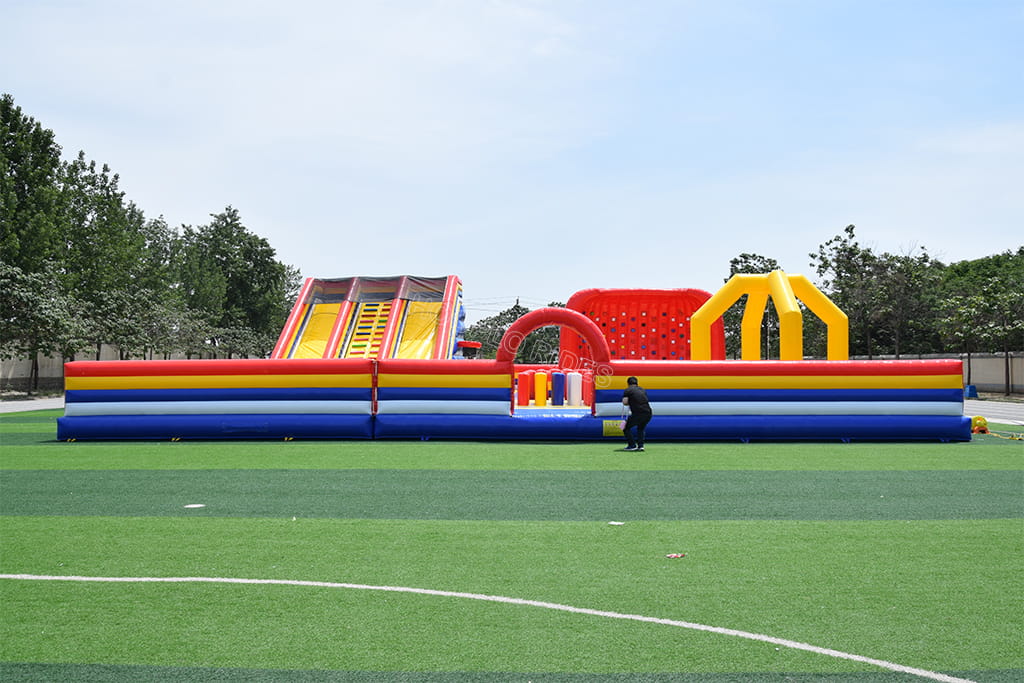
For inflatable amusement operators, daily maintenance is an important part of keeping equipment safe, clean, and ready for long-term use. While many operators focus on setup and operation, properly packing and storing an inflatable bounce house after closing is equally important. Correct deflation and folding methods can help prevent unnecessary wear, fabric damage, and shorten downtime for future use.
1. Clean the Inflatable Before Packing
Before starting the packing process, remove any dirt, leaves, water stains, or other debris from the inflatable surface. If the bounce house has been used outdoors, check the jumping area, entrance, slide sections, and corners where dust or moisture may accumulate.
For better maintenance, allow the inflatable to dry completely before folding. Storing a wet inflatable for a long time may cause mold, unpleasant odors, or material damage.
2. Turn Off the Blower and Release Air Completely
After the business hours are over, turn off the blower and disconnect the power supply before packing. Open the deflation zippers or air outlets to help the air escape faster.
It is important to wait until most of the air has been released before folding. Folding an inflatable while it still contains a large amount of air can make the process more difficult and may put unnecessary pressure on seams and connection areas.
3. Fold the Inflatable Step by Step
Once the inflatable is fully deflated, begin folding from the outer edges toward the center. Large sections such as walls, slides, and climbing areas should be folded carefully to avoid sharp bends or excessive pressure on specific parts.
During the folding process:
- Keep the surface clean and flat.
- Avoid dragging the inflatable across rough ground.
- Do not forcefully fold areas with accessories or attached decorations.
- Make sure ropes, stakes, and accessories are collected separately.
A proper folding method makes the inflatable more compact, easier to transport, and faster to install during the next operation.
4. Store the Inflatable in a Dry and Safe Area
After folding, place the inflatable in a suitable storage location away from direct sunlight, sharp objects, chemicals, and excessive moisture.
A good storage environment should be:
- Dry and well ventilated.
- Protected from extreme temperatures.
- Free from rodents or other potential sources of damage.
Operators should also regularly check stored inflatables, especially before reopening the season or transporting the equipment to a new location.
5. Regular Maintenance Extends Product Lifespan
Proper storage is only one part of inflatable maintenance. Regular inspections should also be carried out to check:
- Seams and stitching areas.
- Air tubes and zippers.
- Blower connections.
- Safety ropes and anchor points.
- Surface materials and accessories.
Small issues found early can usually be repaired quickly and prevent larger problems during operation.
Conclusion
A commercial inflatable bounce house is a long-term investment for amusement operators. Proper packing and storage after each operation not only keeps the equipment looking better but also improves safety, reduces repair costs, and extends its service life.
By following the correct deflation, folding, and storage procedures, operators can keep their inflatable attractions in excellent condition and provide a better experience for customers.